Despite widely-harbored resistance to the idea, anyone authoring content that fails to evidence, at minimum, an attempt at universal accessibility cannot hope that said content be useful as more than, at maximum, a non-example object of study for students of instructional design. Such content is now an absurd relic from the Pedagogical Dark Ages, serving as the instructional equivalent of a 15th century medical instrument curated for some museum’s display about blood-letting. Even had it not arrived in the wake of neurodiversity’s newly-recognized ubiquity, the worldwide post-traumatic stress disorder (PTSD) endemic update, which we can safely assume all of our neurological operating systems have been running since early 2020, has nonetheless proved to be the new normal. This self-evident overwhelm of our collective brain-state categorically demands that Universal Design for Learning be the only design for learning.

Proof
Neurodiveristy is common. For a moment after writing that sentence, I began combing the internet for scholarly articles to legitimize my claim. Then I closed the tab. Because acknowledging neurodiversity is simply acknowledging that “the way we all process and perceive information, think, and learn can be different from person to person” (Banes, 2021, p. #); that we have different brains and, therefore, different ways of learning, knowing, and demonstrating knowledge.
Publix Aisles and Neural Pathways
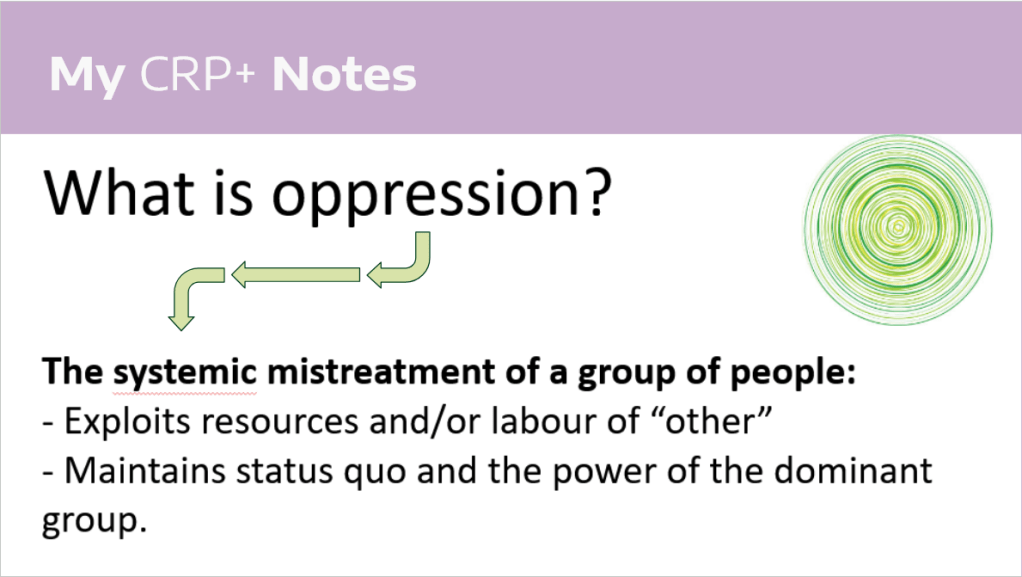
Why is this significant? I grew up for the most part in the Deep South’s west-central Florida. Therefore, the majority of my experiences accompanying a grocery-shopping parent took place in the widely-regarded penultimate of Florida grocers: Publix Supermarkets. It was in this setting where my child-mind absorbed the pattern that if our family wanted to eat tacos, we needed to locate ingredients in the “Ethnic” aisle, a universally occurring designation found in Publix throughout my home state. These aisles included foods inspired by Caribbean, Latin American, and Asian countries and the flavors found therein. It was not until college that I learned what ethnic meant; nor was it until this time that I came to recognize that, by using this designation, these stores were actually organizing foods, organizing the peoples who invented these foods, by two categories: Euro-American ethnicity and Other ethnicity.
Analogous to this, while we may easily find numbers representing how many people per one hundred within demographic-X or demographic-Y will be statistically likely to fall under the category of neurologically atypical, every living human being has a brain and no two brains are identical. Not only are no two brains identical, but also, no two brains in human history will possess the same neural pathways, will have fortified or pruned the same synapses, will, in other words, experience learning in the exact same way (The Royal Institution, 2018). Compounding that fact, infinite diversity of human genetic predispositions, environments, and experiences influence the “huge differences” of brain development rates as we grow and —given the discovery of the brain’s nearly ageless neuroplasticity, (The Royal Institution, 2018)–exponential divergences as we age. Frankly, attempting to divide brains into the two homogeneous categories of neurotypical and neurodiverse betrays a fundamental ignorance of these words’ meanings. Brains are diverse because people are diverse. Brains are neuro because, you know, that’s what neuro means.
Democracy or something
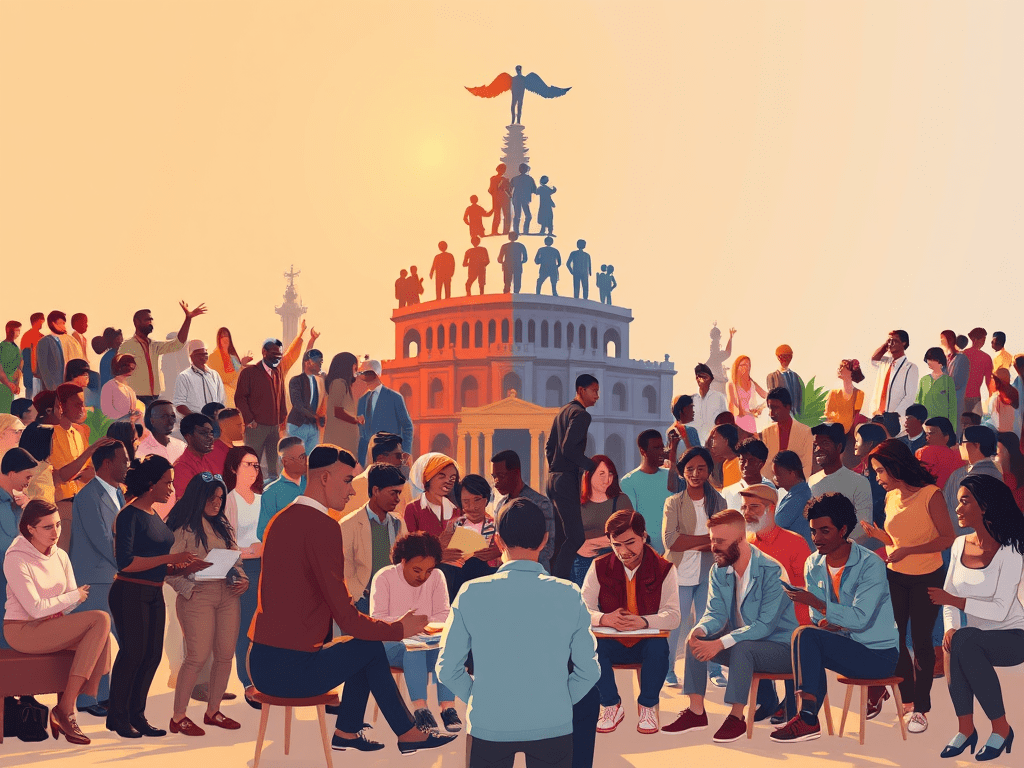
Yet, here many of us are, participating, toward one direction or another, in the citizenry of a self-proclaimed democratic country. If democracy remains central to our political ethos, so then must an ever-sustained electorate, equally empowered to exercise their equal voting rights as the direct result of being equally equipped with information and the ability to judge it by means of equal access to learning. If every voter has a brain and every brain processes information differently, then creating diverse learning opportunities is the only logical course of action. In other words, everyone in the United States needs access to equally impactful learning opportunities or we need to call our country whatever it is that we want to be rather than a democratic republic.
Politics of Traumatized Learners
Coupled with this, there is now a universal need for trauma-informed learning facilitation. Neurologically speaking, we know that the human brain deploys a life-saving defensive stress response to perceived danger, but that the protracted or severe experience of stimuli read as dangerous actually reorders the brain’s operating system, displacing the prefrontal cortex from the proverbial executive position and installing in its place the limbic system, to greatly impaired effect (Dovetail Qld, 2019). We know that when this happens, brains go from being capable of receiving sensory experiences and appropriately processing them toward short- and long-term memory for our benefit to remaining trapped in the neurological purgatory of hypervigilance, ever-preparing to fight, fly, freeze, or fawn at a moment’s notice (Therapy in a Nutshell, 2022).
Onto 2020’s world stage entered Covid-19 and, with it a global stress response and precipitations of infinitely spiraling secondary traumas, the cumulative effects and of which are and will continue to be felt for an unknowable number of future decades, if not centuries. Consequently, trauma-informed opportunities for learning are now, and within the foreseeable future will continue to be, the only opportunities for learning.
If learning must be redefined as only that which can be accomplished when engagement has been rendered universally accessible, some may wonder at what cost such a radically amended definition might come. If, however, our unprecedented global context demands no less, perhaps the more pressing question is at what cost will the denial of such access come?
References
Banes, D. (2021, July 19). Addressing neurodiversity through universal design. DifferentBrains.org. URL
Dovetail Qld. (2019, Aug 7). Trauma and the Brain [Video]. YouTube. https://youtu.be/ZLF_SEy6sdc?si=kC1agAFClmz35tkR
The Royal Institution. (2018, August 22). The Neuroscience of the Teenage Brain with Sarah-Jayne Blakemore [Video]. YouTube. https://youtu.be/yQXhFa8dRCI?si=oi3JFWvUHpKLtqEV
Therapy in a Nutshell. (2022, Apr 14). How trauma and PTSD change the brain [Video]. YouTube. https://youtu.be/wdUR69J2u6c?si=CZOTh-jvnBk9E3bU

 small Matters Learning
Leave a comment